


Mark these important dates in your calendar to avoid missing your opportunity to adjust your coverage:
ACA Marketplace: November 1, 2024 – January 15, 2025 (most states)
Medicare: October 15 – December 7, 2024 (Fall Open Enrollment)
Employer Plans: Typically between October and December, but dates vary by company
Understanding basic insurance terminology will help you better assess plan costs and benefits. Here are a few must-know terms:
Premium: Your monthly cost for insurance
Deductible: The amount you pay out-of-pocket before insurance starts to cover services
Copay: A fixed fee for specific healthcare services, paid after meeting the deductible
Coinsurance: The percentage of service costs that you pay after reaching your deductible
Out-of-Pocket Maximum / Limit: The cap on your total spending for covered services within a plan year
Pharmacy Benefit Manager (PBM): A company that manages prescription drug benefits on behalf of health insurers
When comparing plans, consider your health needs and financial situation. Here are some common plan types:
Traditional vs. High-Deductible Plans: Traditional plans have lower deductibles but may have higher premiums. High-deductible plans (HDHPs) have lower premiums but require you to pay more upfront before insurance kicks in. HDHPs are often paired with Health Savings Accounts (HSAs), which allow you to save for medical expenses tax-free.
HMO vs. PPO: Health Maintenance Organizations (HMOs) generally require referrals and limit coverage to in-network providers, whereas Preferred Provider Organizations (PPOs) offer more flexibility but may come at a higher cost.
ACA Plans and Subsidies: ACA plans cover a range of needs, from essential health benefits to high-cost coverage. Plans are grouped into five levels—Catastrophic, Bronze, Silver, Gold, and Platinum—each offering a different “actuarial value,” which represents the portion of healthcare costs covered by the plan. Depending on your income and family size, you may qualify for subsidies that make ACA plans more affordable.
Short Term Plans and Association Health Plans: Short Term Plans and Association Health Plans offer lower premiums but come with significant drawbacks. Unlike ACA-compliant plans, they often don’t cover essential health benefits, may exclude prescription drugs, and impose coverage limits. These plans frequently include pre-existing condition clauses, making them unsuitable for individuals with chronic illnesses. While appearing affordable, they can lead to higher out-of-pocket costs when care is needed. Consumers should approach these plans cautiously, as the lower premiums may result in inadequate protection and financial risk.
Medical and pharmacy benefits are two distinct coverage types that handle specialty drugs differently. Medical benefits typically cover about 50% of specialty drugs, particularly those that require administration by a healthcare professional, such as injectables or infusions given in clinical settings. These benefits don’t involve a Pharmacy Benefit Manager (PBM) and copayments may vary based on vial sizes. On the other hand, pharmacy benefits cover the remaining 50% of specialty drugs, focusing on medications that can be self-administered at home, including oral medications and self-injectables. Pharmacy benefits involve a PBM and often have higher cost-sharing requirements compared to medical benefits. Copayments under pharmacy benefits can change based on the number of vials or units for certain medications. The key differences lie in the types of drugs covered, the involvement of PBMs, the administration setting, and the cost-sharing structures.
Prior authorization is a cost-control process requiring advance approval for certain health care services, especially specialty medications. It typically takes 5-10 business days for clinical pharmacists and medical doctors to review the request. Healthcare providers often need to submit a detailed request, including a letter of “medical necessity.” While this process can prevent unnecessary treatments, it may also delay care and create administrative burdens. The procedure involves submitting clinical information to justify the need for the requested service or medication.
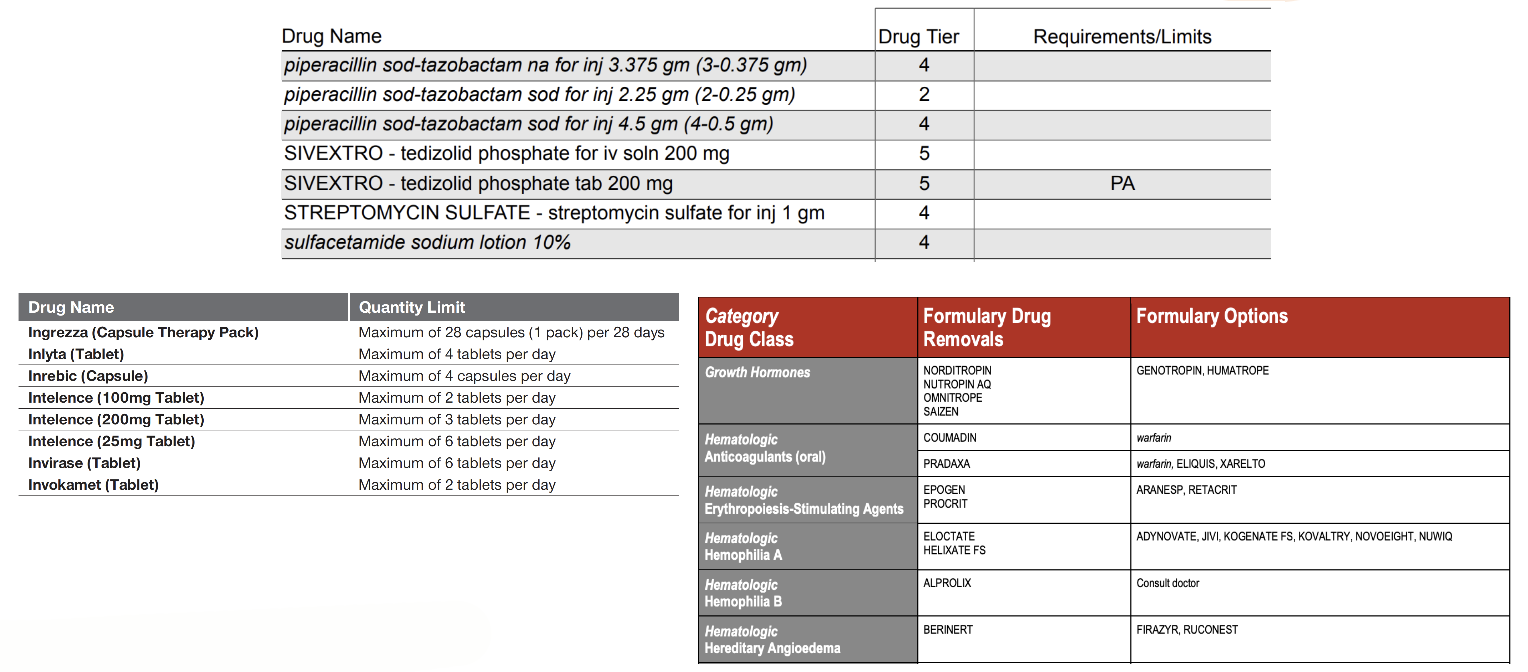
A drug formulary is a list of generic and brand-name drugs covered and/or excluded by your health insurance plan.
Drug formulary examples:
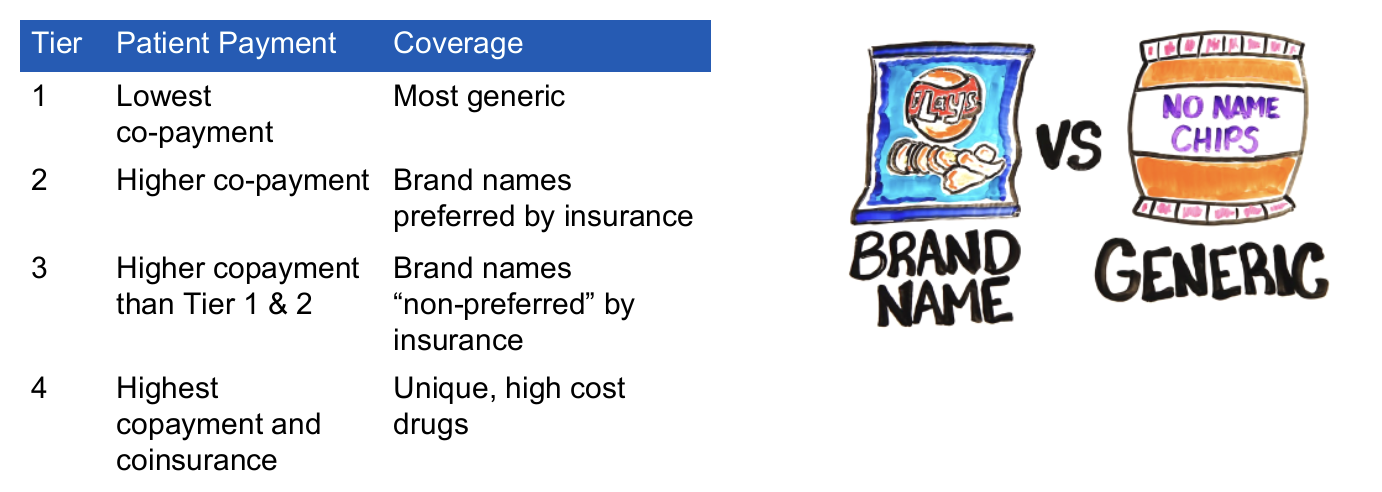
Specialty tiers is a cost-sharing strategy by insurers that places drugs into the following “tiers”:
Step therapy, or “fail-first” policy, is a cost-containment strategy requiring patients to try preferred, often less expensive medications before accessing more costly alternatives. Patients must show that initial treatments are ineffective or cause adverse effects before receiving approval for the originally prescribed drug. While aimed at controlling costs, the increasing implementation of step therapy raises concerns among providers and patients, as it can lead to unnecessary side effects and delays in effective treatment. Critics argue that it gives insurers excessive control over patient care. Although patients can appeal these decisions, the process can be time-consuming, potentially delaying necessary treatment by months.
Copay accumulator adjustors are insurance policies that exclude manufacturer copay cards from counting toward a patient’s deductible and out-of-pocket maximum. These programs, also known as Copay Maximizers, Coupon Adjustment Programs, Benefit Plan Protection, or Out-of-Pocket Protection Programs, are designed to shift more costs onto patients. While several states have passed laws banning copay accumulators, the language and scope of these laws vary significantly. Importantly, these state bans typically only apply to state-regulated plans and not to ERISA plans, which are federally regulated. As a result, it’s estimated that these bans affect only about 10% of commercially-covered lives.
For those who rely on manufacturer copay cards, it’s essential to understand whether your insurance uses a “copay accumulator” policy. These policies prevent copay assistance from counting toward your deductible or out-of-pocket maximum, potentially leading to higher costs—especially for those with chronic conditions requiring expensive specialty drugs.
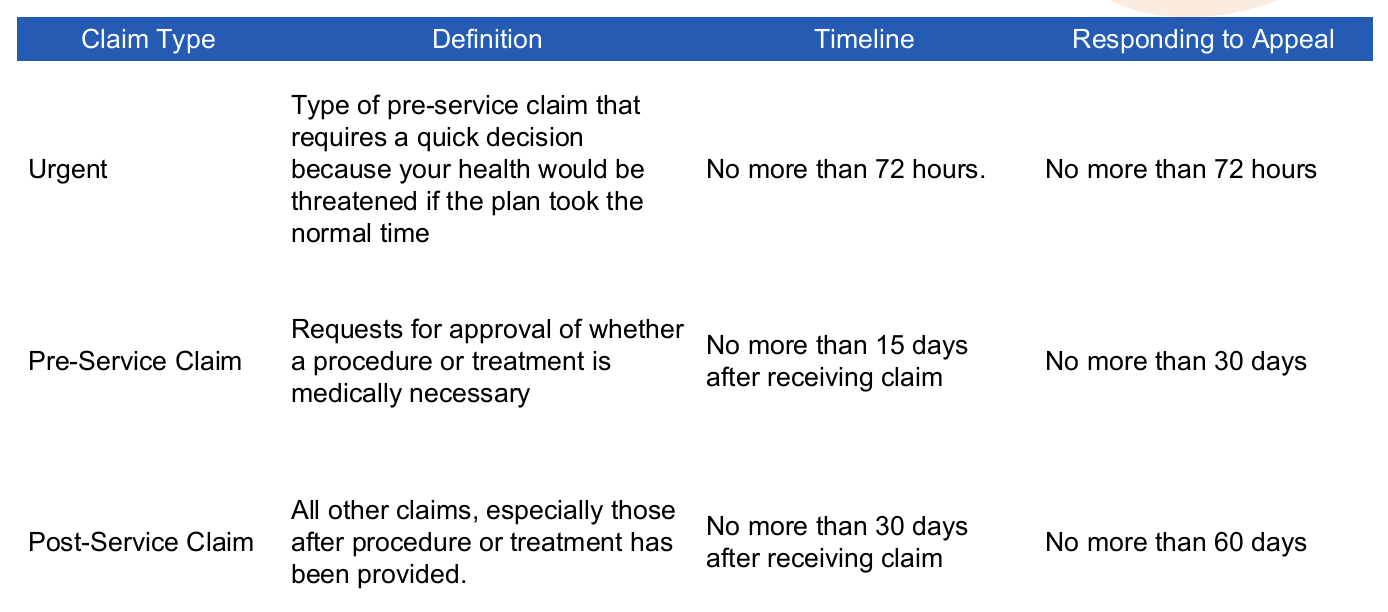
Here’s a comparison of the three different claim types and the response to an appeal time:
Medicare can feel complex, but knowing the basics can ease the process. During Fall Open Enrollment, you can switch from Medicare Advantage to Original Medicare or make changes to Part D drug plans. Additionally, Medigap policies (supplemental insurance) can help cover costs like copays and coinsurance.
Several programs offer financial help for those with chronic illnesses or rare diseases:
Patient Access Network Foundation
Accessia Health for financial and legal support
The Assistance Fund
National Organization of Rare Diseases (NORD)
When assessing your health insurance needs for you and your family, these are important questions to ask yourself:
1. What are my health insurance needs this year?
2. How do this year’s plans differ from last year’s?
3. Are there new providers, or changes in coverage?
4. How will my choice affect my take-home pay (for employer plans) or tax situation?
Before choosing a health insurance plan, consider the following:
1. Review your healthcare spending from the previous year.
2. Ensure your preferred doctors and clinics are in-network.
3. Check if your medications are covered.
4. For ACA plans, explore your options on the Health Insurance Marketplace.
5. If you’re eligible for Medicare, understand the different enrollment periods and coverage options.
6. For employer-sponsored insurance, attend informational sessions or consult with your HR department.
Open enrollment is a critical time to reassess your healthcare needs and choose the best coverage for you and your family. Take the time to review your options carefully and consider reaching out to HR, Healthcare.gov, or Medicare’s Find-a-Plan tool for additional guidance. Remember, missing the open enrollment period can result in waiting a full year before you can make changes to your coverage, so mark those dates and plan accordingly.
By understanding your options and asking the right questions, you can make informed decisions that protect your health and financial well-being in the coming year.
Whether you’re looking for infusion medication, infusion nursing, or have questions about your insurance, we’re here to help.
DISCLAIMER: THIS IS NOT MEDICAL OR LEGAL ADVICE. All information, content, and material is for informational purposes only and is not intended to serve as a substitute for the consultation, diagnosis, and/or medical treatment of a qualified physician or healthcare provider or as legal advice. Please consult a physician or other health care professional for your specific health care and/or medical needs or concerns and never disregard professional medical advice or delay in seeking it because of something you have read here or on our website.