


The medical term for a nosebleed is epistaxis. Bleeding occurs when tiny, fragile blood vessels in the mucous membrane lining the nose rupture. These blood vessels are located close to the surface of the nose and are easily injured. There are two primary types of nosebleeds:
Anterior Nosebleeds – Most common, bleeding comes from the front of the nose where the two nostrils meet, just below the bony bridge of the nose. The delicate blood vessels in this area can easily break. Anterior nosebleeds can usually be treated at home without seeking medical intervention.
Posterior Nosebleeds – This type of nosebleed occurs deeper inside the nose, closer to the throat, where the blood vessels are larger. Posterior nosebleeds may require immediate medical attention.
Nosebleeds can occur without any trauma. Dry air and scratching in the nose are typical triggers. The membranes in the nose are more prone to bleeding when they are dry, crusty, or itchy. Common causes of nosebleeds include:
Nose-picking, especially in children
Trauma to the nose
Foreign objects placed in the nose
Colds, sinus infections, nasal congestion, hay fever, allergies
Forceful nose-blowing or hard sneezing
Dry air and forced air indoor heating
Dry, hot, low-humidity, or high-altitude climates
Medical conditions such as high blood pressure, a nasal tumor or polyp
Excessive use of inhaled nasal sprays or recreational drugs
Exposure to smoke, fumes, or chemical irritants
Taking medications that thin the blood
While anyone can experience a nosebleed at some point in their life, certain groups are more susceptible:
Children aged 2-10 – Young children often stick their fingers or objects in their noses
Adults over 45 – Atherosclerosis (hardening of the artery walls) and high blood pressure become more common as we age
Pregnant women – The expansion of blood vessels during pregnancy places additional pressure on the delicate capillaries in the nose
People on blood-thinning medications such as warfarin, aspirin, or NSAIDS
Individuals with bleeding disorders like hemophilia, von Willebrand disease, or platelet dysfunction
Preventing nosebleeds starts with ensuring the nose stays moist and avoiding situations that can lead to bleeding. Here are some effective strategies:
Teach children to keep fingers and objects out of their noses. Be patient, as this can be a challenging habit to break. At 3-years-old, my son was highly skilled at wedging Legos up his nose.
Avoid picking, rubbing, or scratching your nose. Keeping children’s fingernails short can help minimize injuries.
Humidify the air in your home with a humidifier or vaporizer, especially at night. Lower the thermostat to prevent excessive dryness.
Moisten the inside of the nose by using a saline spray or gel a couple times a day, particularly before bed. Products like Bacitracin®, Vaseline®, Ayr Gel®, KY Jelly®, or an antibiotic ointment can be effective.
Avoid harsh nose-blowing.
Sneeze with your mouth open to reduce its force.
Limit the use of antihistamine and decongestant sprays, which can dry out the nasal passages.
Wear protective equipment for the head and face during activities that may lead to injury.
Avoid heavy lifting and strenuous activities for 24 hours following a nosebleed, as these activities can increase pressure on blood vessels, potentially causing another bleed.
Many “home remedies” claim to stop nosebleeds – a penny placed under the upper lip, applying a cold pack on the back of the neck or forehead, drinking cayenne pepper or hot sauce mixed with water, gargling or dabbing the inside of the nose with vinegar. However, there is no scientific proof that these methods are effective.
Applying firm, consistent pressure to the septum is essential in stopping a nosebleed because it compresses the blood vessels. When a nosebleed occurs, it can be challenging for a clot to form until the bleeding slows down, as freely flowing blood washes away the components needed for clotting.
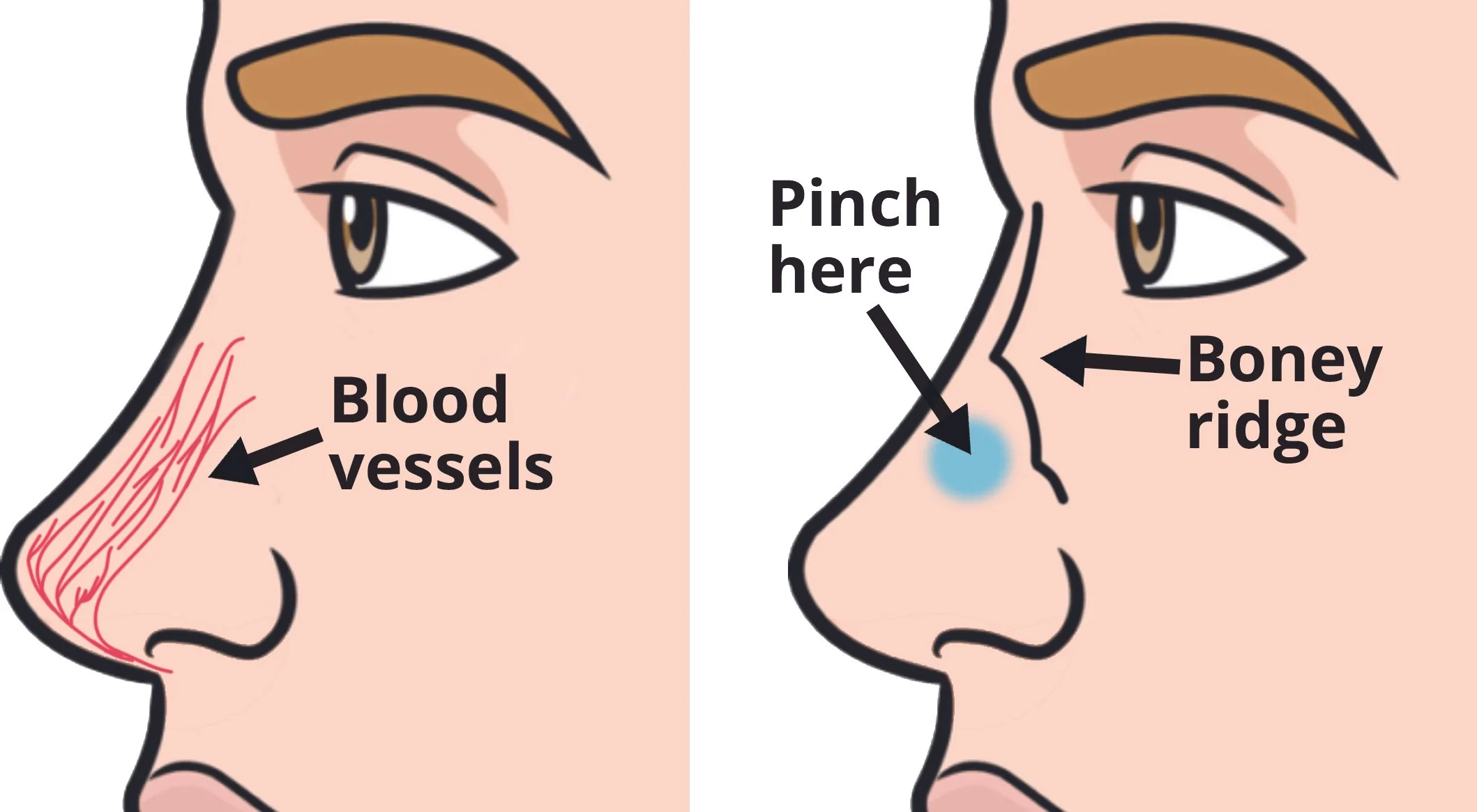
Follow these steps to manage a nosebleed effectively:
Stay calm: It’s normal to feel anxious when you see blood. If a child is experiencing a nosebleed, offer reassurance and encourage them to remain still and quiet. Crying can increase the blood flow.
Breathe through your mouth.
Positioning: Sit upright or stand and slightly lean forward so blood drains out of the nose rather than going down the throat. Leaning forward also helps you monitor whether it has stopped. Avoid swallowing any blood, as it can lead to vomiting.
Clear the Nose: Gently blow your nose to remove mucus and soft, jelly-like clots, as these can hinder proper clotting and cause blood to continue oozing.
Pinch the Nose and Apply Firm Pressure: Using your thumb and index finger, pinch the sides of your nose at the soft part just above the nostrils. Apply firm, consistent pressure and hold it for 10 minutes.
Check the Bleeding: After 10 minutes, release the pressure and check if the bleeding has stopped. If it hasn’t, repeat the steps, increasing the duration of consistent pressure as needed.
Consider a topical clotting powder: WoundSeal®, NasalCREASE®, or Quick Seal® are over-the-counter powders that, when applied to the inside of the nose, help form a protective clot.
Additional methods as approved and directed by your physician:
Infuse with clotting factor, administer desmopressin (DDAVP), or use aminocaproic acid (Amicar®) or tranexamic acid (Lysteda®) if necessary.
Apply a spray of phenylephrine, such as Afrin® or Neo-Synephrine® to help constrict the blood vessels. This can also be done between steps #4 and #5 – after clearing the nose and before pinching the nose.
For recurring nosebleeds, consult your doctor about using an estrogen cream such as Premarin®. During a challenging time with my son’s nosebleeds, an ENT surgeon suggested cauterizing his nose. We sought a second opinion from an allergist, who recommended applying a small amount of Premarin® with a Q-tip in his nose twice daily for three days. The estrogen helps thicken the mucosal lining, allowing the blood vessels to heal. The Premarin® treatment was remarkably effective; after the three-day treatment, my son went an entire year without a nosebleed.
If other options have been exhausted, cauterization may be necessary to seal the bleeding blood vessels.
Surgery may be required to remove polyps, or correct a broken nose or a deviated septum.
If a nosebleed results from a head injury, a fall or blow to the face, or if the nose is possibly broken.
If an object is stuck in the nose – have a medical professional remove it to prevent further damage.
If the bleeding does not stop after 20 minutes or if more than an expected amount of blood has been lost.
If the bleeding causes weakness, dizziness, faintness, nausea, vomiting, shortness of breath, or difficulty breathing.
While nosebleeds can be alarming, they are often manageable with proper care and prevention strategies. Understanding the underlying causes, recognizing who is more at risk, and implementing effective measures can significantly reduce the frequency and severity of nosebleeds. If nosebleeds become persistent or severe, it’s important to seek medical advice to rule out any underlying health issues. With awareness and a proactive approach, individuals and families can navigate the challenges of nosebleeds with greater confidence and peace of mind.
Securing access to prescribed therapy, resolving insurance issues, and dealing with medically-related financial burdens represent some of the health system challenges faced by members of the bleeding disorders community. Our Patient Navigation Program at LUX Infusion is here to help!
DISCLAIMER: THIS IS NOT MEDICAL OR LEGAL ADVICE. All information, content, and material is for informational purposes only and is not intended to serve as a substitute for the consultation, diagnosis, and/or medical treatment of a qualified physician or healthcare provider or as legal advice. Please consult a physician or other health care professional for your specific health care and/or medical needs or concerns and never disregard professional medical advice or delay in seeking it because of something you have read here or on our website.
References
McDonald, Kathleen Rose. “Nosebleeds (Epistaxis) in Children: Causes, Risk Factors, and How to Stop Them.” Houston Ear Nose Throat & Allergy, Houston Ear, Nose, Throat & Allergy Clinic, 1 Feb. 2023, www.houstonent.com/blog/nosebleeds-epistaxis-in-children-causes-risk-factors-and-how-to-stop-them.
“Nosebleeds (Epistaxis): Causes, Treatment & Prevention.” Cleveland Clinic, 19 Dec. 2024, my.clevelandclinic.org/health/diseases/13464-nosebleed-epistaxis.
“Nosebleeds.” Nosebleeds > Types of Bleeds > Treatment and Care Options > Hog Handbook > Hemophilia of Georgia, www.hog.org/handbook/chapid.3,sctid.33,artid.63,css.print/article.asp. Accessed 8 Jan. 2025.
ENT, Fauquier. “Vaginal Premarin Cream for Recurrent Nosebleeds?” Fauquier ENT Blog, 23 May 2010, blog.fauquierent.net/2010/05/vaginal-premarin-cream-for-recurrent.html.